The practical answer
LinkedIn connections may not turn into business when the audience is poorly matched, the message moves too quickly to a pitch or follow-up lacks context. A connection creates a route to a relationship. Commercial progress depends on relevance, trust, a suitable need and an agreed next step.
A connection is an opening
I value LinkedIn because it gives me a way to meet people, understand what they do and discover where a conversation could be useful. The number beside a profile does not tell me whether those relationships are developing.
If new connections are not leading anywhere, I would review who you are connecting with and what happens afterwards before increasing the activity.
Check the fit of your audience
A prospect list should reflect the work you want to win. Sector, role, business size and likely need all help shape a useful audience. A wide list can create plenty of activity without many relevant conversations.
For professional services, understand the firm’s world. An accountancy partner and a law firm founder may have different service priorities and client relationships. The message should reflect the recipient rather than swap a job title into the same pitch.
Give people a reason to reply
A connection acceptance is not an invitation to send a long description of everything you sell. Start with a relevant observation, a shared context or a thoughtful question that the other person can answer naturally.
I prefer language that sounds like the person behind the business. A founder-led message should carry their experience and curiosity. AI can assist with drafting, but someone still needs to decide whether the message makes sense for that contact.
Make your profile support the conversation
A new contact may look at your profile, recent posts or website. They should be able to understand who you help, the work you do and the experience behind it. Those touchpoints should reinforce the introduction.
Content can give a contact a useful reason to remember you: a practical lesson, an answer to a customer question or a piece of work explained clearly. It is context for the relationship, rather than a substitute for responding to someone.
Follow the reply, not just the sequence
When a person responds, use what they have said. A fixed sequence that ignores a reply makes the conversation feel disconnected. The next step may be a resource, an introduction, a meeting or simply keeping in touch.
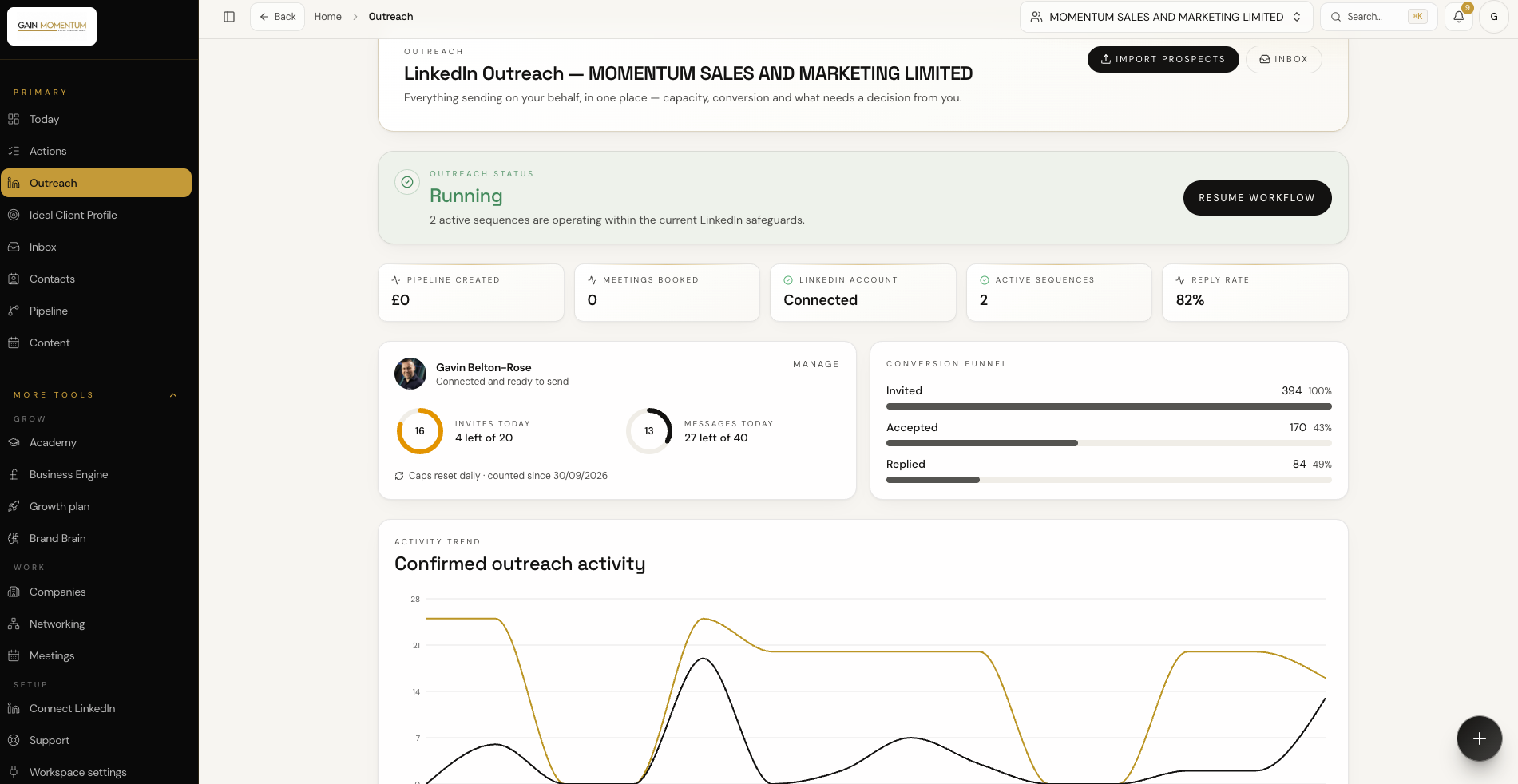
The outreach view shown here is from Gain Momentum. Tools can support contacts, activity and pipeline visibility. People remain responsible for reviewing messages, managing replies and working within the platform’s permitted use.
Measure the conversations worth developing
Look at reply quality, suitable meetings and opportunities alongside connection growth. A larger network can be valuable, but it should not be described as sales growth without evidence.
My approach is to connect audience, message, content and follow-up around a clear commercial purpose. That gives you a way to understand what is working and where the next improvement belongs.
Explore the work behind the thinking
Read the relevant client case study to see the commercial context and the work involved. Every business has a different starting point; a case study is experience to assess, rather than a promise of the same outcome.
Questions business owners ask
Should I pitch every new connection?
No. Consider why you connected and what the other person has shared. A relevant conversation is a better starting point than assuming immediate buying intent.
Can LinkedIn support professional services growth?
It can support relationships and conversations where the firm’s prospective clients and introducers are active. Targeting, professional responsibilities and follow-up need to fit the firm.
Weekly series edition: 4 November 2026. First published on this website: 9 November 2026.