The practical answer
A busy business can struggle to grow when its time is absorbed by delivery, unsuitable work or unstructured sales activity. The useful question is where commercial progress is being constrained: customer fit, capacity, conversion, repeat business or a lack of consistent prospecting. More activity only helps when it addresses the right constraint.
Busy is a description of your week
You can finish every day exhausted and still be unsure what has moved the business forward. Delivery is happening. Emails are answered. Meetings fill the calendar. But the work that builds the next stage of the business keeps getting pushed to another day.
I would not assume the answer is to work harder. I would want to see where the time goes and how that activity connects to the customers and work you want to win.
Look at the work you are attracting
A high volume of enquiries can look positive while creating pressure. If they concern work outside your offer, have a poor commercial fit or take significant time to qualify, the team can become busier without building a healthier business.
Review recent wins and enquiries together. Which customers fit your strengths? Which work can you deliver well? Which relationships create repeat opportunities? Your next growth decision may involve attracting better-fitting work rather than simply more names.
Find the point where opportunities stop moving
An enquiry can arrive quickly and then sit waiting for a response. A proposal can go out without a clear next conversation. A promising contact from an event can disappear into a phone or notebook.
Map the journey from first contact to customer. Give each stage an owner and look for repeated delays. A simple follow-up improvement can be more useful than another campaign when the existing opportunities are not being worked.
Make the offer easier to understand
If a customer cannot quickly see what you do, who it helps and why it is relevant, every conversation has to rebuild the explanation. The owner often becomes the only person who can sell the business effectively.
Compare your website, proposals and outreach messages. They should tell the same commercial story, with enough detail and evidence to help someone decide whether a conversation makes sense.
Choose a small number of growth priorities
A list of twelve growth projects is difficult to deliver alongside client work. Choose the constraint that matters most and a manageable set of actions around it. A 90-day plan can give that work a useful structure without pretending every outcome will arrive within three months.
For TIWI CorkSpray, the wider growth picture involves products, training, an installer network and website development. Those routes need to connect. The lesson is to consider the whole commercial system before committing to a single channel.
Make the plan part of the working week
Agree who owns each action, when progress will be reviewed and what evidence you need. That might be qualified conversations, suitable enquiries, proposals or conversion. Keep the review close enough to the work that it leads to decisions.
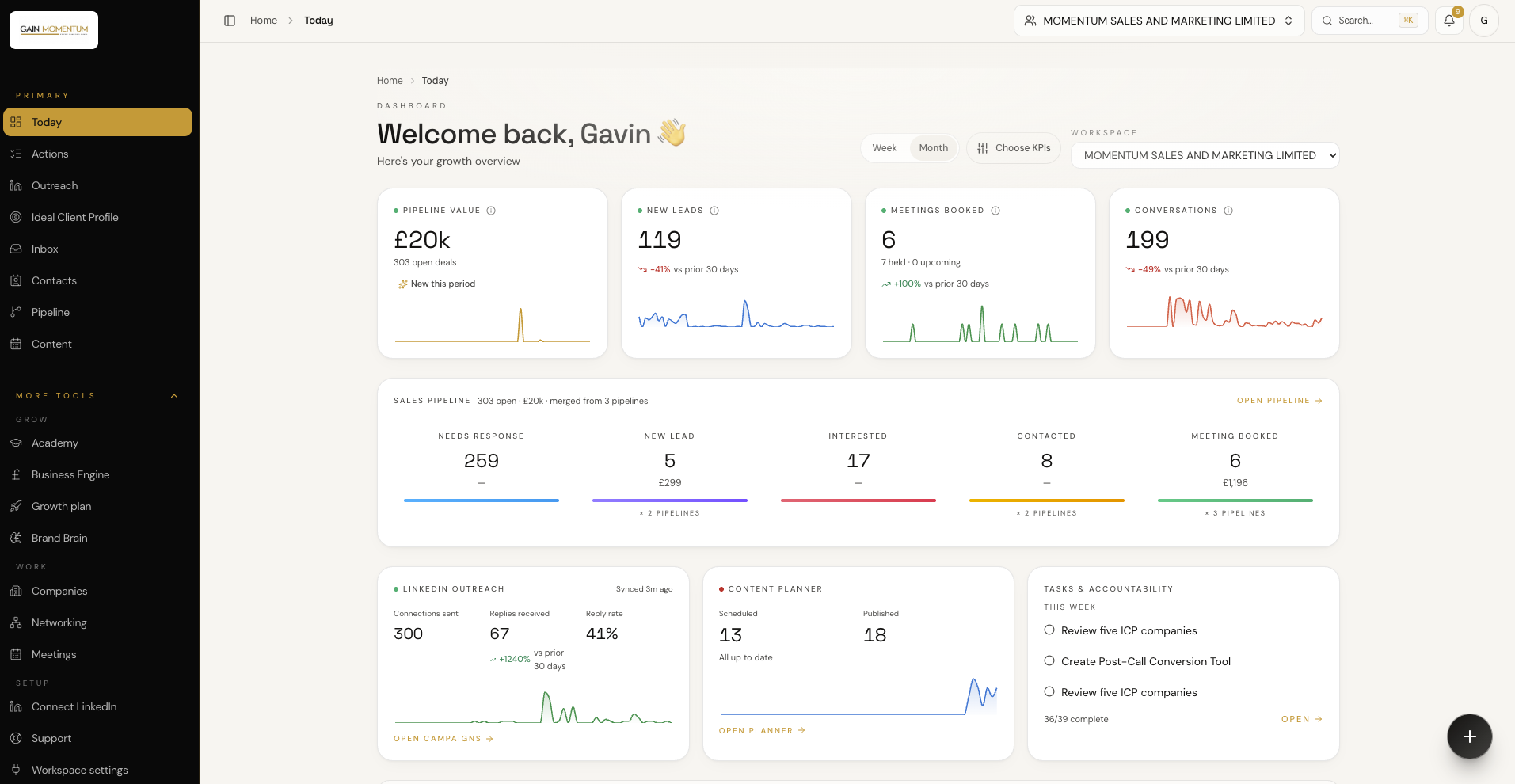
Gain Momentum can help bring contacts, activity and opportunities into view. The screenshot here is from my workspace. A dashboard is useful when it helps you decide what to do next; the business still needs people to make those decisions and follow through.
Explore the work behind the thinking
Read the relevant client case study to see the commercial context and the work involved. Every business has a different starting point; a case study is experience to assess, rather than a promise of the same outcome.
Questions business owners ask
Should a busy business spend more on marketing?
First check whether the constraint is a shortage of suitable demand, weak conversion or limited delivery capacity. More marketing will not resolve every growth problem.
What should I review first?
Start with recent enquiries, wins, lost opportunities and the work consuming the most time. That gives you a practical basis for choosing the next priority.
Weekly series edition: 14 October 2026. First published on this website: 26 October 2026.